
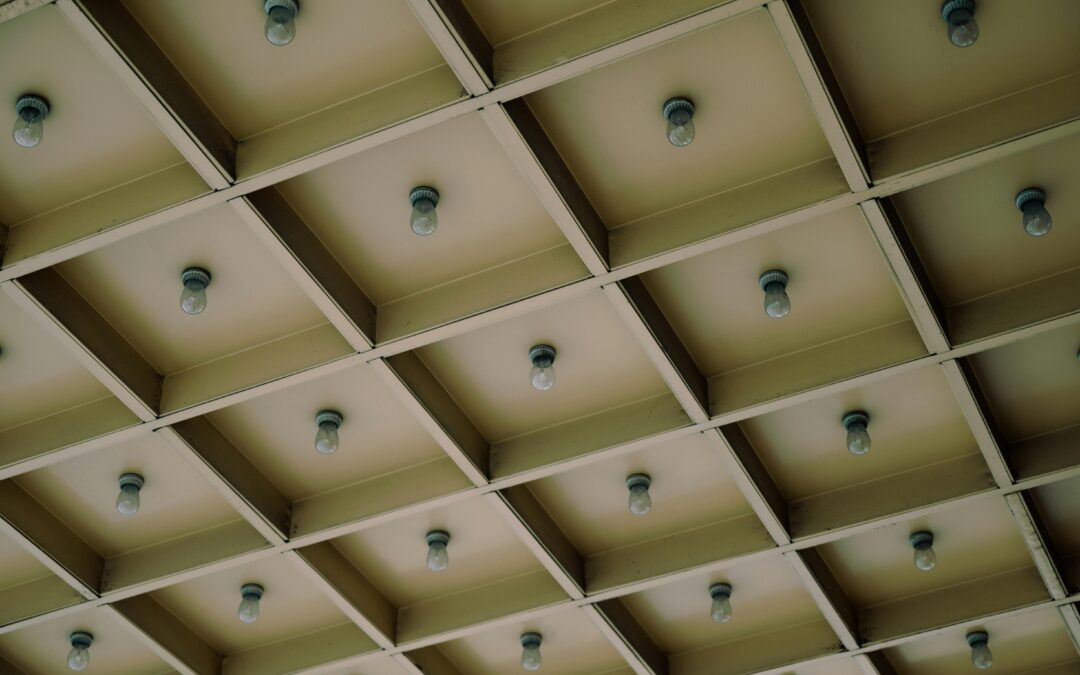
Every commercial client wants a ceiling that blends function, aesthetics, and ease of maintenance. But in practice, ceilings often become barriers — hiding ductwork, making repairs costly, or amplifying noise. That’s why many businesses choose suspended grid systems, especially t-bar ceilings, installed by trusted drywall contractors in Edmonton. Whether you’re comparing drywall companies or evaluating ceiling options for your next project, understanding the benefits of t-bar systems is key.
In this blog, we’ll dive into why t-bar ceilings are a smart choice for commercial spaces, and how a contractor like Imperial Drywall Contracting can deliver value in Edmonton’s market.
What Is a T-Bar Ceiling System?
A t-bar ceiling, also called a suspended or grid ceiling, consists of a metal grid of “T” bars hung from the building’s structural slab. Ceiling tiles or panels fit into that grid, forming a secondary ceiling below the structure. This system conceals wiring, HVAC, plumbing, and fire‐suppression lines while allowing easy access for servicing above.
The Key Benefits of T-Bar Ceilings in Commercial Settings
1. Maintenance & Accessibility Without Major Disruption
One of the chief advantages of a t-bar ceiling is modular access. Individual tiles can be removed without disturbing the surrounding panels or grid. That makes servicing lighting, wiring, or HVAC components faster, cheaper, and less intrusive.
In fast‐turn commercial environments, minimal downtime is critical.
2. Acoustic Performance & Noise Control
Commercial buildings often battle echo and noise from hard surfaces. By using sound-absorbing tiles, a t-bar ceiling helps dampen sound, improve speech intelligibility, and create a calmer environment.
3. Design Flexibility & Visual Appeal
Want integrated LED lighting, branded ceiling accents, or geometric patterns? The modular nature of the t-bar allows you to mix panels — even transparent or perforated ones — to suit the branding and aesthetic of your space.
4. Cost Efficiency & Speed of Installation
Compared to full drywall or plaster ceilings, t-bar installations are often faster, less labour intensive, and more forgiving. Because only tiles, not full drywall panels, need removal or replacement during repairs, long-term maintenance is more economical.
5. Energy Efficiency & HVAC Integration
A well‐installed t-bar ceiling contributes to better plenum control above the tiles. Reducing unintended leakage in the ceiling plenum helps the HVAC system perform more efficiently. Ceiling tiles also reflect light, boosting illumination without increasing lighting loads.
When T-Bar Ceilings Aren’t Ideal (But Often Can Be Adapted)
While t-bar ceilings fit many commercial spaces, some scenarios demand alternatives or hybrid solutions:
- Heavy installations such as large mechanical equipment or chilled beams may require structural support beyond standard t-bar grids.
- High moisture or industrial settings require moisture-resistant or metal tiles to avoid sagging or corrosion
- In very high ceiling spaces (e.g. atriums), exposed or architectural ceilings may be more dramatic
A competent drywall contractor in Edmonton will assess your site, usage, and mechanical layout before recommending a ceiling system.
Choosing a contractor who understands not only ceilings but also energy and insulation systems means more integrated, optimized results. T-bar ceiling systems are often the best option for commercial environments thanks to their accessibility, acoustic performance, design flexibility, cost efficiency, and synergy with HVAC and insulation systems.
Recent Comments